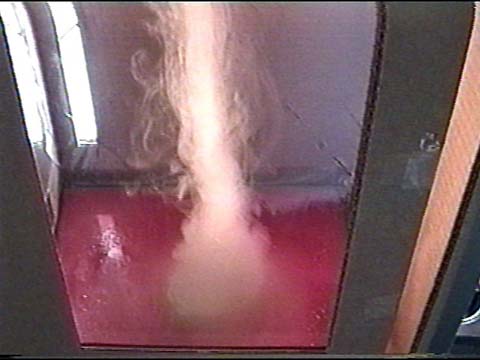
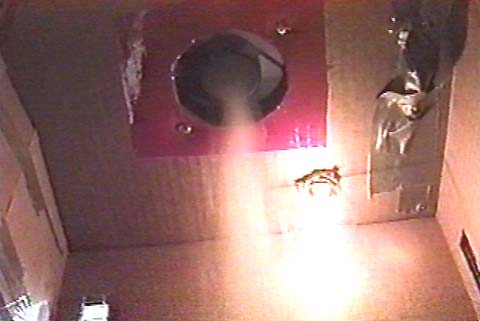
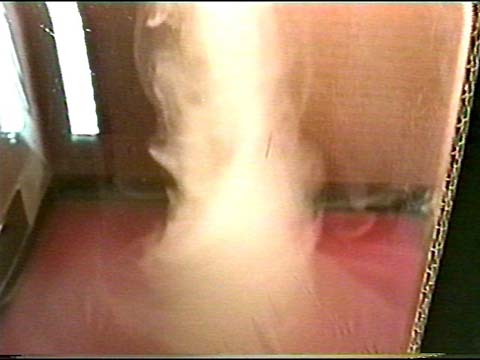
| Closeups of the bottom showing the initiation of the vortex. | ||
1). 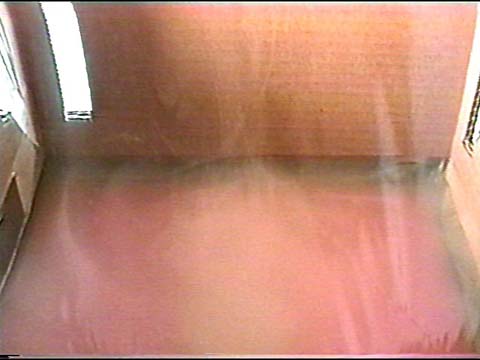 |
2). 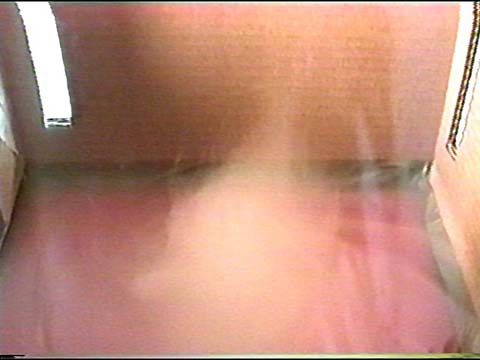 |
3).  |
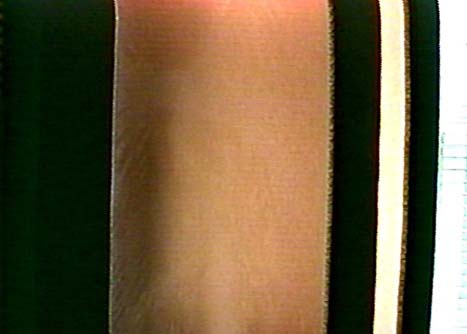
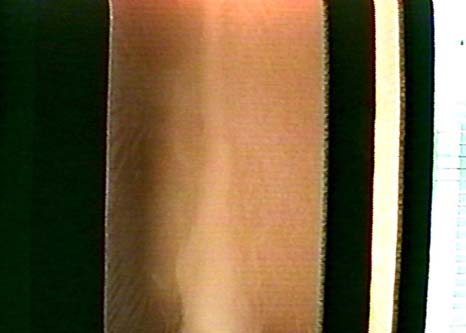
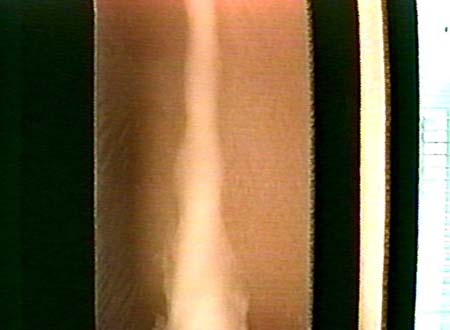
| Zoomed out shots of the entire vortex as it starts up | ||
1).  |
2).  |
3).  |
| Shots of a landspout (?) on May 24, 1998 going through similar stages. | ||
1). 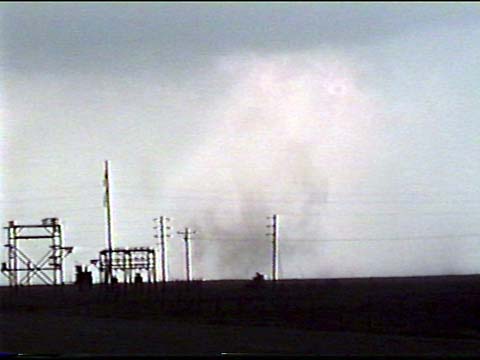 |
2). 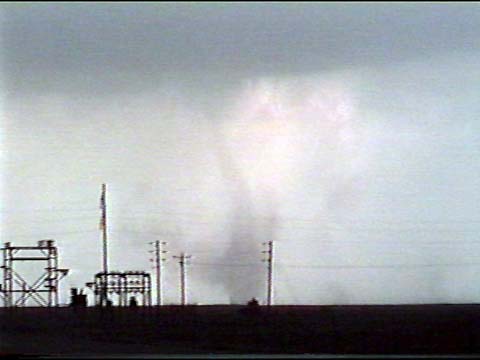 |
3). 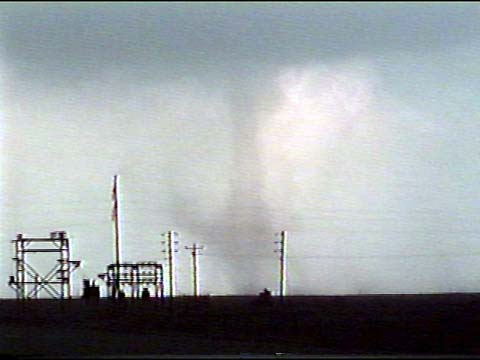 |
I've got a number of questions and observations about this simulation chamber that I'm hoping someone can shed light on:
I've noticed an interesting similarity between this vortex and so-called "landspouts". I've been told that the images shown above I took on May 24, 1998 are of a landspout. This formed to the west of the main mesocyclone as the RFD cut into it. It looks as if it formed under the storm's flanking line. A real tornado formed about 15 minutes later under the mesocyclone. Notice that, in both the simulator and real life, the vortex starts from the bottom as a whirl and grows upward until it reaches the top.
Why does the vortex in the chamber seem to form "upside down"? (i.e., wide at the bottom & skinny at the top)
In the chamber, air is being sucked up from the top while directional shear is provided by the slots in the sides of the chamber. This forms the "landspout-ish" vortex. Can this simulator even form the more characteristic tornado look? (wide at the top and skinny at the base)
Do tornadoes need to have air going down inside them surrounded by upward-moving air to look like they do?